“Be gentle with yourself. The rest of your life deserves it.” (Sandra L. Brown, MA)
Over the past month or more I have been talking about healing from a dangerous and/or pathological relationship. The chronic stress disorder and often Post Traumatic Stress Disorder (PTSD) that occurs from the damage done in the relationship requires a serious change in lifestyle in order to heal.
We have been talking about those changes–what needs to change physically, emotionally, and spiritually. In the last segment, we discussed the negative ‘world view’ effects resulting from pathological exposure. The negative world view impacts how you now see your post-pathological relationship world. This includes how you NOW see yourself, others, the world, your future, and God. (You can read past issues about this subject on our blog–the link is listed below).
One of the seriously ‘under treated’ effects of pathological relationship exposure is the healing of the personal world view (you can listen to the audio segment I created about this topic on the magazine under CDs/Audios. The untreated aspects ‘mimic’ PTSD symptoms with increases in depression, anxiety, fear, isolation, dread of the future and other similarly related PTSD side-effects. Healing your world view is critical to a healthy future.
Another often ‘untreated’ effect of pathological relationship exposure is the ‘unconscious adopting of the pathological’s world view.’ Not only was your world view altered from the damage done to you IN the relationship, but your world view was also altered from the damage done to you THRU the pathological. One of the unrelenting side effects is the ‘learned experience’ of seeing the world through ‘his’ eyes.
One of the things that makes pathologicals, pathological is the effect of their pathology on how they see themselves in relation to the world and others. Pathologicals are noted for their over/under sense of themselves, over/under opinion of others, and their unusual view of what the world ’should’ do for them.
While you may not have adopted these exact views like the pathological, chances are that your views have been tainted with the pathological’s viewpoint. This can include normalizing abnormal behaviors or dissociating pieces of reality AWAY from yourself. Normalizing can make womanizing, over/under employment, drug dealing, alcohol/drug abuse, domestic violence, lying, cheating, stealing, or other overtly wrong behavior ‘marginal’ when you have taken on his view of life and right/wrong. Pathologicals don’t operate by the rules. They create them for their unique situations and break them for fun.
When your grip on societal boundaries begins to slip, you have been affected by his view of the world. When his behaviors become ‘just a little different’ than other people’s or ‘all people are like this’ — your world view has been infiltrated. When you begin to think of other people like he does, or define others by his warped definitions, when you believe his ‘take’ on things or tell yourself only partials truths so you don’t have to really see his ‘real’ self–your world view has been penetrated. When you become numb and lethargic to the things he has done, your world view has been violated.
This is just one more aspect of your wounded world view that needs healing if you are going to recover. A wounded world view does not allow for living the gentle life. And the gentle life is probably not even possible until the way you see yourself, others, and the world becomes ‘gentle.’
Pathologicals are harsh. They leave people feelings irritated, rubbed raw, and chapped. Your interior does not feel ‘gentle’ –it feels the opposite of it. Pathologicals are notoriously ‘negative’ so you may have found your mood, thinking, and reactions to have taken on his negativity. It’s hard to heal when everything looks like he told you it looked–bad (and it’s all your fault!) It’s hard to live the gentle life for yourself when your emotions are anything BUT gentle.
This is the point about the necessity of healing the world view–it’s a critical part of your recovery. Because having been warped by a pathological, ‘HOW you see determines WHAT you see.’
Visit www.saferelationshipsmagazine.com to learn more
Tuesday, September 17, 2013

Tuesday, September 10, 2013
The Gentle Life, Part 5-Soul Tearing—The Spiritual & World View Effects
The last few weeks I have been talking about the necessity of living a gentle life if you are recovering from a dangerous and/or pathological relationship. The damage it does to a person is profound and many are often diagnosed with a chronic stress disorder OR Post Traumatic Stress Disorder (PTSD) because of it. These disorders respond best to a ‘gentle life’ that allows the body, mind, and spirit to rest from the overload of adrenaline and stress it has experienced in the dangerous relationship. (Read our previous newsletters about this topic listed on the magazine)
I have talked about physically how to ‘adjust’ your environment if you have a stress disorder and we also talked about the emotional effects—anxiety, depression, and other after-effects associated with PTSD. Today, we are going to talk about the spiritual effects.
Dangerous and pathological relationships violate at a deep soul level. That’s because it touches on the core building blocks of our concepts about relationships–Trust, Love, and Hope. Deception is evil and sick and when you realize ‘who/what’ you have been with, there is a violation that cuts to the deepest part of a person: their spirit.
Often these kinds of pathological relationships have already ‘played into’ your soul connection…leading you down the path of believing that your ‘connection’ was spiritual in nature. There were probably lots of promises of the ‘life together’ and all the ‘reasons God brought you two together.’ In the end, they were lies but before you knew they were lies, they were HOPES.
~ “Hope is the thing with wings, that perches in the soul.” ~ (Emily Dickinson)
So many pathological relationships have “an intense attachment” that feels like ‘connection’ or ’soul mate status’ when in reality it is just the intense game of the ‘pathological’ sucking you in and hoping you will confuse intensity with something healthy.
But Hope, Love, and Trust are all core spiritual values and when you have invested those core values and beliefs in someone and then the heinous deception is revealed that the ‘goal’ of the relationship was to manipulate you all along, something ‘rips’ inside of you. This ’soul tearing’ brings a spiritual skepticism, a distrust that permeates everything you EVER believed…sometimes even about God.
It’s a disastrous wound to your ‘world view’ and how you see yourself, others, God, and the world at large.
These mortal wounds to your world view can last a long time because, in effect, they are the ways you have come to ‘believe’ about yourself (I can’t trust my intuition), others (everyone is evil), the world (it’s a sick place) and God (He didn’t protect me). This profound shift in your world view can increase the symptoms of PTSD–depression, anxiety, alienation, loneliness, isolation, and a fear or dread of the future.
So often the spiritual effects of the pathological relationship are overlooked both by the victim and by the therapist. This ‘world view’ earthquake has shaken the foundation of your belief system. Without repair to the foundation from which you build your self concept, healing is limited to only symptom management. Spiritual healing of your world view is paramount to your overall recovery.
I have created a 15 minute audio (mp3) “Spiritual Effects’ that goes into more detail about healing your world view and the spiritual effects of dangerous relationships. I think the audio will greatly help your understanding of WHY this part of yourself MUST be healed as well and how the unhealed aspects can impact depression, anxiety, reaching out to others, and your future relationships. You can pick it up on the magazine under Shopping/CDs, Audios.
Also, if you are in counseling, please allow your counselor to listen to the mp3 too. This will help them address these issues with you in counseling. This is an area so often ‘under treated’ by other counselors. I teach on this aspect a lot at professional conferences and therapists are eager to understand this aspect of spiritual side effects and its impact on chronic stress disorders.
I have talked about physically how to ‘adjust’ your environment if you have a stress disorder and we also talked about the emotional effects—anxiety, depression, and other after-effects associated with PTSD. Today, we are going to talk about the spiritual effects.
Dangerous and pathological relationships violate at a deep soul level. That’s because it touches on the core building blocks of our concepts about relationships–Trust, Love, and Hope. Deception is evil and sick and when you realize ‘who/what’ you have been with, there is a violation that cuts to the deepest part of a person: their spirit.
Often these kinds of pathological relationships have already ‘played into’ your soul connection…leading you down the path of believing that your ‘connection’ was spiritual in nature. There were probably lots of promises of the ‘life together’ and all the ‘reasons God brought you two together.’ In the end, they were lies but before you knew they were lies, they were HOPES.
~ “Hope is the thing with wings, that perches in the soul.” ~ (Emily Dickinson)
So many pathological relationships have “an intense attachment” that feels like ‘connection’ or ’soul mate status’ when in reality it is just the intense game of the ‘pathological’ sucking you in and hoping you will confuse intensity with something healthy.
But Hope, Love, and Trust are all core spiritual values and when you have invested those core values and beliefs in someone and then the heinous deception is revealed that the ‘goal’ of the relationship was to manipulate you all along, something ‘rips’ inside of you. This ’soul tearing’ brings a spiritual skepticism, a distrust that permeates everything you EVER believed…sometimes even about God.
It’s a disastrous wound to your ‘world view’ and how you see yourself, others, God, and the world at large.
These mortal wounds to your world view can last a long time because, in effect, they are the ways you have come to ‘believe’ about yourself (I can’t trust my intuition), others (everyone is evil), the world (it’s a sick place) and God (He didn’t protect me). This profound shift in your world view can increase the symptoms of PTSD–depression, anxiety, alienation, loneliness, isolation, and a fear or dread of the future.
So often the spiritual effects of the pathological relationship are overlooked both by the victim and by the therapist. This ‘world view’ earthquake has shaken the foundation of your belief system. Without repair to the foundation from which you build your self concept, healing is limited to only symptom management. Spiritual healing of your world view is paramount to your overall recovery.
I have created a 15 minute audio (mp3) “Spiritual Effects’ that goes into more detail about healing your world view and the spiritual effects of dangerous relationships. I think the audio will greatly help your understanding of WHY this part of yourself MUST be healed as well and how the unhealed aspects can impact depression, anxiety, reaching out to others, and your future relationships. You can pick it up on the magazine under Shopping/CDs, Audios.
Also, if you are in counseling, please allow your counselor to listen to the mp3 too. This will help them address these issues with you in counseling. This is an area so often ‘under treated’ by other counselors. I teach on this aspect a lot at professional conferences and therapists are eager to understand this aspect of spiritual side effects and its impact on chronic stress disorders.
Tuesday, September 3, 2013
Living The Gentle Life Part 4:‘Ah….just get a life!’
People ever tell you that? Sometimes from the chronic stress and upheaval the pathological relationship causes, people can get very one-dimensional and hyper-focused on him/the relationship/or the problems. They stop doing the kinds of things in their life that could help them be LESS obsessed, depressed, or anxious. That’s because women really tend to ‘lose themselves’ in the pathological relationship. It’s a testimony to the strength of pathology.
The crazier it gets, the more they feel like they need to ‘try to understand it’ or ‘try to make him understand what he’s doing’ or ‘do something that will help the relationship feel less pathological.’ This idea can be a 24/7 thing…it can take up your whole life trying to balance the relationship, which, as you have figured out, is un-balanceable.
Getting lost in a very dark tunnel can draw people away from the actions, behaviors, thoughts, people, and resources that previously allowed them to live a happier and more balanced life. The dangerous and pathological relationship is ALL consuming and soon any level of your own self care is abandoned for the insane focus on how to fix him/the relationship.
It isn’t long before others around you notice the myopic/single focused person you have become that can’t think about or talk about anything except the dangerous relationship. This myopic view of your relationship has now blacked out any other part of your life…people are bailing out of your life, emotional resources are dwindling, your life has become the size and shape of him.
Women in the most dire of all situations (especially in domestic violence for instance) are those who have lost physical and emotional resources and can find no way to get out. The less support a woman feels from others the more likely she is to stay because it takes SUPPORT to get out/to break up/or to not go back. So, by the act of myopia, her life and resources just dwindle away.
One day someone says to her ‘man, you need to get a life bigger than THIS!’ and something really hits her about that statement. Like coming out of a big deep freeze…the light bulb goes on—she notices her lack of life and says “What happened to me? Where is my LIFE?????”
The last few weeks in the newsletter I have been talking about ‘Living the Gentle Life’–especially if you are someone who has lived in a pathological relationship or has a chronic stress disorder or PTSD from the relationship.A gentle life is a FULL life–one that includes the finds of things that nurture you, that bring peace to you, are simultaneously IN and PART of our lives.The gentle life is healing because to feel JOY is to send the right kinds of brain chemistry to your brain that fights depression and anxiety and gives the sensation of ‘well-being.’ We need to be Joy Hunters!
Women go back (or pick poorly again) because they fail to build a life for themselves. They know how to ‘invest, invest, invest’ in him and THEIR relationship with him but have NO idea how to ‘invest’ and build their own life WITHOUT HIM like the one listed above. Women who have out side healthy lives ARE the women most likely to get out and stay out.
Loneliness is one of the KEY risk factors in why women go back. There are so many ways to get your needs met for friendship, fun, support, beauty, or whatever you love in life. Building a ‘life’ is the best prevention for relapse a woman can do.
But sadly, many will NOT do it. After 20 years, I can pretty much pick out who will and won’t invest in themselves and build a life. Those that don’t are in the same boat 10 years down the road…either with this pathological person or another one just like him. Those that do build a life are less likely to feel pressured to date or get so lonely they pick up the phone and call him.
The Gentle Life isn’t even possible unless you have a life that is ready for transformation. Living with a pathological man or picking another one is about as OPPOSITE of a gentle life as there is. Will you be one that rebuilds a fabulous life? Or be stuck in your dependency on dangerous and pathological relationships?
So many women say “But I don’t know where to start in the rebuilding…my life has been like this SO long I don’t know where to begin.” This is such an important issue so to solidify this discussion, I have created a companion mp3 called “Stop Focusing on Him: Get a Great Life.” We ran it recently, but I’m gonna put the link in again because it’s such a great reminder!--->LINK
The crazier it gets, the more they feel like they need to ‘try to understand it’ or ‘try to make him understand what he’s doing’ or ‘do something that will help the relationship feel less pathological.’ This idea can be a 24/7 thing…it can take up your whole life trying to balance the relationship, which, as you have figured out, is un-balanceable.
Getting lost in a very dark tunnel can draw people away from the actions, behaviors, thoughts, people, and resources that previously allowed them to live a happier and more balanced life. The dangerous and pathological relationship is ALL consuming and soon any level of your own self care is abandoned for the insane focus on how to fix him/the relationship.
It isn’t long before others around you notice the myopic/single focused person you have become that can’t think about or talk about anything except the dangerous relationship. This myopic view of your relationship has now blacked out any other part of your life…people are bailing out of your life, emotional resources are dwindling, your life has become the size and shape of him.
Women in the most dire of all situations (especially in domestic violence for instance) are those who have lost physical and emotional resources and can find no way to get out. The less support a woman feels from others the more likely she is to stay because it takes SUPPORT to get out/to break up/or to not go back. So, by the act of myopia, her life and resources just dwindle away.
One day someone says to her ‘man, you need to get a life bigger than THIS!’ and something really hits her about that statement. Like coming out of a big deep freeze…the light bulb goes on—she notices her lack of life and says “What happened to me? Where is my LIFE?????”
The last few weeks in the newsletter I have been talking about ‘Living the Gentle Life’–especially if you are someone who has lived in a pathological relationship or has a chronic stress disorder or PTSD from the relationship.A gentle life is a FULL life–one that includes the finds of things that nurture you, that bring peace to you, are simultaneously IN and PART of our lives.The gentle life is healing because to feel JOY is to send the right kinds of brain chemistry to your brain that fights depression and anxiety and gives the sensation of ‘well-being.’ We need to be Joy Hunters!
Women go back (or pick poorly again) because they fail to build a life for themselves. They know how to ‘invest, invest, invest’ in him and THEIR relationship with him but have NO idea how to ‘invest’ and build their own life WITHOUT HIM like the one listed above. Women who have out side healthy lives ARE the women most likely to get out and stay out.
Loneliness is one of the KEY risk factors in why women go back. There are so many ways to get your needs met for friendship, fun, support, beauty, or whatever you love in life. Building a ‘life’ is the best prevention for relapse a woman can do.
But sadly, many will NOT do it. After 20 years, I can pretty much pick out who will and won’t invest in themselves and build a life. Those that don’t are in the same boat 10 years down the road…either with this pathological person or another one just like him. Those that do build a life are less likely to feel pressured to date or get so lonely they pick up the phone and call him.
The Gentle Life isn’t even possible unless you have a life that is ready for transformation. Living with a pathological man or picking another one is about as OPPOSITE of a gentle life as there is. Will you be one that rebuilds a fabulous life? Or be stuck in your dependency on dangerous and pathological relationships?
So many women say “But I don’t know where to start in the rebuilding…my life has been like this SO long I don’t know where to begin.” This is such an important issue so to solidify this discussion, I have created a companion mp3 called “Stop Focusing on Him: Get a Great Life.” We ran it recently, but I’m gonna put the link in again because it’s such a great reminder!--->LINK
Tuesday, August 27, 2013
Living The Gentle Life, Part 3:The Emotional Effects
In the previous newsletters I have been talking about recovering from a pathological love relationship. The toll it takes on people often leaves them with chronic stress symptoms and for extremely bad relationships, often Post Traumatic Stress Disorder (PTSD)–a diagnosable anxiety disorder. The long term stress from the pathological love relationship (with narcissists, abusive partners, socio/psychopaths) effect people emotionally, physically, sexually and spiritually.
I have been talking about what the body ‘does’ when it is under chronic stress and the results of this unrelenting stress. (The previous newsletters about this are on the magazine under Sandra’s Current Article) The last newsletter discussed how to deal with the physical ramifications of stress and I even created a unique relaxation audio for people with chronic stress or PTSD (which is available on the magazine under Shopping/CDs,Audios). I also talked about changing your physical environment to embrace the needs of a stress disorder.
Today, we are going to discuss the emotional effects and how to create the Gentle Life for your emotional needs as well.
PTSD is as an emotional disorder that falls in the category of an anxiety disorder therefore, someone with chronic stress of any kind needs to learn the types of techniques that help reduce emotional anxiety. The problem is, by the time people ‘ask for help’ with chronic stress or PTSD, they have often lived with it for a long time and the symptoms are now extreme.
The emotional effects of untreated PTSD can include tension, panic attacks, depression, anxiety, sleep disturbances, intrusive thoughts, nightmares, flash backs or hyper-startle reflex. All of these are distressing and over time a combination of these symptoms are normal to have all at the same time.
The relaxation technique is a way of managing the physical symptoms of PTSD. Relaxation techniques are not ‘optional’ in the recovery of chronic stress/PTSD. That’s because these techniques have a dual purpose. These same relaxation techniques also help manage the emotional symptoms as well as the physical. Learning correct breathing to ward off anxiety and panic attacks can be done thru the relaxation techniques.
Likewise, these same techniques can help with sleep disruptions, and tension. Chronic stress and PTSD are disorders that should be treated by a professional therapist. Especially with PTSD, the symptoms tend to increase over time if not treated. People make the mistake of waiting until it is totally unbearable and then it takes time to back down the symptoms. People are often ‘hopeful’ it will just go away when the pathological relationship has ended or contact is ended. These aren’t the worst relationships in the world for nothing! They are labeled that because they produce horrible side effects!
Unfortunately, PTSD is a chronic disorder which means you are likely to have symptoms off and on for years, maybe a lifetime. This is all the more reason to learn how to manage the symptoms when you may need to. Intrusive thoughts are one of the most complained about symptoms.
This is when unwanted thoughts of the pathological person/relationship keep popping in your head. No matter how many times you try to ‘not’ think about it, it keeps coming back. The problem with the imagery in your mind is that each time it pops in there it has the ability to trigger you. Your body responses to that trigger with adrenaline which just starts your whole stress cycle over again. So managing the intrusive thoughts and flashbacks is imperative to emotionally regulating yourself and living the gentle life.
Living the gentle life means removing yourself from personalities that are similar to the pathological relationship. We often tend to migrate BACK to the same kinds of people and relationships we just left. These kinds of abusive people can cause an emotional avalanche. It is important that you understand the kinds of traits in people you should avoid if you have PTSD or stress. This could be people who remind you of the pathological person, loud or aggressive people, people who violate your boundaries or bother you in other ways. Stress and PTSD do mandate that you develop self protective skills such as boundaries—learning to say no or leave environments that increase your symptoms. Learn to migrate instead to people who are serene or leave you feeling relaxed and happy.
Creating your gentle physical environment will also help you emotionally. An environment that is soothing, calm, quiet, soft, and comfortable has the best chance of allowing an over-stimulated body to relax. Changing your physical environment for your emotional benefits and adding the
relaxation technique can greatly impact the amount of emotional symptoms you experience. Learning ‘emotional regulation skills’ for stress/PTSD is a must.
I have been talking about what the body ‘does’ when it is under chronic stress and the results of this unrelenting stress. (The previous newsletters about this are on the magazine under Sandra’s Current Article) The last newsletter discussed how to deal with the physical ramifications of stress and I even created a unique relaxation audio for people with chronic stress or PTSD (which is available on the magazine under Shopping/CDs,Audios). I also talked about changing your physical environment to embrace the needs of a stress disorder.
Today, we are going to discuss the emotional effects and how to create the Gentle Life for your emotional needs as well.
PTSD is as an emotional disorder that falls in the category of an anxiety disorder therefore, someone with chronic stress of any kind needs to learn the types of techniques that help reduce emotional anxiety. The problem is, by the time people ‘ask for help’ with chronic stress or PTSD, they have often lived with it for a long time and the symptoms are now extreme.
The emotional effects of untreated PTSD can include tension, panic attacks, depression, anxiety, sleep disturbances, intrusive thoughts, nightmares, flash backs or hyper-startle reflex. All of these are distressing and over time a combination of these symptoms are normal to have all at the same time.
The relaxation technique is a way of managing the physical symptoms of PTSD. Relaxation techniques are not ‘optional’ in the recovery of chronic stress/PTSD. That’s because these techniques have a dual purpose. These same relaxation techniques also help manage the emotional symptoms as well as the physical. Learning correct breathing to ward off anxiety and panic attacks can be done thru the relaxation techniques.
Likewise, these same techniques can help with sleep disruptions, and tension. Chronic stress and PTSD are disorders that should be treated by a professional therapist. Especially with PTSD, the symptoms tend to increase over time if not treated. People make the mistake of waiting until it is totally unbearable and then it takes time to back down the symptoms. People are often ‘hopeful’ it will just go away when the pathological relationship has ended or contact is ended. These aren’t the worst relationships in the world for nothing! They are labeled that because they produce horrible side effects!
Unfortunately, PTSD is a chronic disorder which means you are likely to have symptoms off and on for years, maybe a lifetime. This is all the more reason to learn how to manage the symptoms when you may need to. Intrusive thoughts are one of the most complained about symptoms.
This is when unwanted thoughts of the pathological person/relationship keep popping in your head. No matter how many times you try to ‘not’ think about it, it keeps coming back. The problem with the imagery in your mind is that each time it pops in there it has the ability to trigger you. Your body responses to that trigger with adrenaline which just starts your whole stress cycle over again. So managing the intrusive thoughts and flashbacks is imperative to emotionally regulating yourself and living the gentle life.
Living the gentle life means removing yourself from personalities that are similar to the pathological relationship. We often tend to migrate BACK to the same kinds of people and relationships we just left. These kinds of abusive people can cause an emotional avalanche. It is important that you understand the kinds of traits in people you should avoid if you have PTSD or stress. This could be people who remind you of the pathological person, loud or aggressive people, people who violate your boundaries or bother you in other ways. Stress and PTSD do mandate that you develop self protective skills such as boundaries—learning to say no or leave environments that increase your symptoms. Learn to migrate instead to people who are serene or leave you feeling relaxed and happy.
Creating your gentle physical environment will also help you emotionally. An environment that is soothing, calm, quiet, soft, and comfortable has the best chance of allowing an over-stimulated body to relax. Changing your physical environment for your emotional benefits and adding the
relaxation technique can greatly impact the amount of emotional symptoms you experience. Learning ‘emotional regulation skills’ for stress/PTSD is a must.
Tuesday, August 20, 2013
Gentle Life Part Two The Physical Effects
In the previous newsletter I had begun talking about the normal after-math of pathological love relationships—Post Traumatic Stress Disorder. (Previous newsletter is on the magazine under Sandra’s Current Articles.)
PTSD is an anxiety disorder that is often re-activated by daily ‘triggers.’ These can include people, places, things, or sensory feelings that reconnect you with the trauma of the relationship. In the last newsletter I talked about the gentle life and how an over-taxed and anxious body/mind needs a soothing life. I cannot stress this enough that people MUST remember that their PTSD symptoms CAN BE re-activated if you aren’t taking care of yourself and living a gentle life.
What IS a gentle life? A gentle life is a life lived remembering the sensitivities of your PTSD. It isn’t ignored, or wished away–it is considered and compensated for. Since PTSD affects one physically, emotionally, sexually, and spiritually–all of those elements need to be considered in a
gentle life. Just as if you had diabetes you would consider what you eat or what medication you need to take, so is it with PTSD.
Interestingly, although PTSD has its description listed in the psychiatric manuals, PTSD has some very real physical effects as well. In fact, they have even discussed listing it in physician’s manuals as well because the untreated on-going effects of acute stress are well known in the medical community. Since PTSD has both components of emotional and physical symptoms, someone recovering from PTSD must take those aspects into account.
Physically, PTSD is often a chronic condition by the time you take yourself for emotional help. That means you have been living with it for a while and it has been wreaking havoc on your physical body during that time. Unbridled anxiety/stress/fear pumps enormous amounts of adrenaline and cortisol into your body. This over stimulates your body and mind and causes insomnia, paranoia, hyperactivity, a racing mind/intrusive thoughts and the inability to ‘let down’ and ‘rest.’
A body that has been living on adrenaline needs the adrenal glands to ‘chill!’ People often complain of chronic insomnia which also leads to depression. Depression can lead to lethargy, over eating, weight gain and hopelessness. It is possible to have both anxiety and depression occurring at the same time. Un-managed stress, anxiety, and adrenaline can lead to longer term medical problems often associated with stress–lower GI problems, migraines, teeth grinding, aggravated periods, chest pain, panic attacks, chronic fatigue and most auto-immune disorders like fibromyalgia, lupus, chronic fatigue, arthritis, and MS.
So, CLEARLY PTSD is something that SHOULD be treated. Physically that means to go to someone who can diagnose you–a therapist or psychiatrist. In the early parts of treatment, it is normal to take anti-anxiety medication, anti-depressants or sleep aides in order to rectify your depleted brain chemistry and to allow the adrenal glands to ‘rest’ and stop pumping out the adrenaline. Your doctor is in the best position to tell you what will help you relieve your physical symptoms.
Additionally, you need to help your body and brain produce the ‘good stuff’ in your brain chemistry which means exercising, eating well, and learning relaxation techniques. Too much adrenaline has been pumping through your body with no way to get utilized. Excessive adrenaline makes your feel jumpy and restless. Exercise (even moderate walking) helps to produce endorphins in your brain that produce those feelings of ‘well-being’ and helps to burn off the adrenaline and any extra weight you might have gathered.
Although during depression you often don’t FEEL like exercising, you will always feel bad if you don’t get your body moving. Stress is even stored at the cellular level of our bodies. You must, must, must get moving in order to feel better.
Eating well means not trying to medicate your depression and low energy with carbs. When you are depressed your body craves carbs as a source of quick energy but the spikes in blood sugar add to the sense of mood highs and lows. You’ve already had enough ‘junk’ in the relationship–think of it as nurturing to give your body good food to replace all the ‘junk’ that it has been through. You can greatly help mood swings by eating well.
Dealing with the negative habits you have picked up as a ‘coping mechanism’ is also necessary. Lots of people with PTSD try to medicate their anxiety and depression. This could be through smoking, relationship hopping, sex, eating/binging/purging, drugs (legal and illegal) and the
increased use of alcohol. In fact, one of the devastating side effects of PTSD is how many alcoholics it produces. Anything you are prone to right now tends to increase when you have PTSD because you begin to do that habit more and more to manage your PTSD symptoms. Finding positive coping skills instead of negative habits is a great step in your recovery.
Physical recovery also means paying attention to not reactivating your symptoms. Your physical environment in which you live, play and work must be conducive to low stimulation. That means low lights, low noise, and low aggravation. Sometimes that means making big changes in how your house is run so that it is not loud, noisy and over active. Sometimes that means making big changes in the PEOPLE you hang out with — getting rid of the loud, noisy, over active, aggressive and pathological. And sometimes it means making big changes in a job where the environment does nothing but trigger you.
Lastly, learning relaxation techniques is not ‘optional’ for people with PTSD. PTSD is a chronic state of hyper-vigilance, agitation, and restlessness. Your body has been over-ridden with adrenaline for a long time and has ‘forgotten’ how to find it’s equilibrium in relaxation. It must be retaught. Re-teaching means doing it daily. Taking 5 – 10 minutes a day to use relaxation breathing and allowing your mind to unwind and giving positive messages to your body to relax will help your tap into this natural relaxation even during times you are not actively trying to relax. The more you use the technique, the quicker your body can relax–even at work or when you are doing something else because it has ‘remembered’ how to.
There are lots of tapes, CDs or videos you can buy on relaxation that walk you thru how to do it (we also have one created for PTSD on the magazine under Shopping/CDs, Audios. Or take Yoga where they teach you these deep breathing techniques that help correct the ’shallow/panting’ breathing that is associated with PTSD and anxiety. This type of breathing can actually trigger panic attacks. Learning to breathe well again is a metaphor for ‘exhaling’ all the junk you’ve been thru and releasing it. If you don’t have a relaxation tape, you are welcome to get our mp3 audio on relaxation techniques on our website. Most importantly is to just become acutely aware that PTSD is physical (and often medical) as it is emotional.
PTSD is an anxiety disorder that is often re-activated by daily ‘triggers.’ These can include people, places, things, or sensory feelings that reconnect you with the trauma of the relationship. In the last newsletter I talked about the gentle life and how an over-taxed and anxious body/mind needs a soothing life. I cannot stress this enough that people MUST remember that their PTSD symptoms CAN BE re-activated if you aren’t taking care of yourself and living a gentle life.
What IS a gentle life? A gentle life is a life lived remembering the sensitivities of your PTSD. It isn’t ignored, or wished away–it is considered and compensated for. Since PTSD affects one physically, emotionally, sexually, and spiritually–all of those elements need to be considered in a
gentle life. Just as if you had diabetes you would consider what you eat or what medication you need to take, so is it with PTSD.
Interestingly, although PTSD has its description listed in the psychiatric manuals, PTSD has some very real physical effects as well. In fact, they have even discussed listing it in physician’s manuals as well because the untreated on-going effects of acute stress are well known in the medical community. Since PTSD has both components of emotional and physical symptoms, someone recovering from PTSD must take those aspects into account.
Physically, PTSD is often a chronic condition by the time you take yourself for emotional help. That means you have been living with it for a while and it has been wreaking havoc on your physical body during that time. Unbridled anxiety/stress/fear pumps enormous amounts of adrenaline and cortisol into your body. This over stimulates your body and mind and causes insomnia, paranoia, hyperactivity, a racing mind/intrusive thoughts and the inability to ‘let down’ and ‘rest.’
A body that has been living on adrenaline needs the adrenal glands to ‘chill!’ People often complain of chronic insomnia which also leads to depression. Depression can lead to lethargy, over eating, weight gain and hopelessness. It is possible to have both anxiety and depression occurring at the same time. Un-managed stress, anxiety, and adrenaline can lead to longer term medical problems often associated with stress–lower GI problems, migraines, teeth grinding, aggravated periods, chest pain, panic attacks, chronic fatigue and most auto-immune disorders like fibromyalgia, lupus, chronic fatigue, arthritis, and MS.
So, CLEARLY PTSD is something that SHOULD be treated. Physically that means to go to someone who can diagnose you–a therapist or psychiatrist. In the early parts of treatment, it is normal to take anti-anxiety medication, anti-depressants or sleep aides in order to rectify your depleted brain chemistry and to allow the adrenal glands to ‘rest’ and stop pumping out the adrenaline. Your doctor is in the best position to tell you what will help you relieve your physical symptoms.
Additionally, you need to help your body and brain produce the ‘good stuff’ in your brain chemistry which means exercising, eating well, and learning relaxation techniques. Too much adrenaline has been pumping through your body with no way to get utilized. Excessive adrenaline makes your feel jumpy and restless. Exercise (even moderate walking) helps to produce endorphins in your brain that produce those feelings of ‘well-being’ and helps to burn off the adrenaline and any extra weight you might have gathered.
Although during depression you often don’t FEEL like exercising, you will always feel bad if you don’t get your body moving. Stress is even stored at the cellular level of our bodies. You must, must, must get moving in order to feel better.
Eating well means not trying to medicate your depression and low energy with carbs. When you are depressed your body craves carbs as a source of quick energy but the spikes in blood sugar add to the sense of mood highs and lows. You’ve already had enough ‘junk’ in the relationship–think of it as nurturing to give your body good food to replace all the ‘junk’ that it has been through. You can greatly help mood swings by eating well.
Dealing with the negative habits you have picked up as a ‘coping mechanism’ is also necessary. Lots of people with PTSD try to medicate their anxiety and depression. This could be through smoking, relationship hopping, sex, eating/binging/purging, drugs (legal and illegal) and the
increased use of alcohol. In fact, one of the devastating side effects of PTSD is how many alcoholics it produces. Anything you are prone to right now tends to increase when you have PTSD because you begin to do that habit more and more to manage your PTSD symptoms. Finding positive coping skills instead of negative habits is a great step in your recovery.
Physical recovery also means paying attention to not reactivating your symptoms. Your physical environment in which you live, play and work must be conducive to low stimulation. That means low lights, low noise, and low aggravation. Sometimes that means making big changes in how your house is run so that it is not loud, noisy and over active. Sometimes that means making big changes in the PEOPLE you hang out with — getting rid of the loud, noisy, over active, aggressive and pathological. And sometimes it means making big changes in a job where the environment does nothing but trigger you.
Lastly, learning relaxation techniques is not ‘optional’ for people with PTSD. PTSD is a chronic state of hyper-vigilance, agitation, and restlessness. Your body has been over-ridden with adrenaline for a long time and has ‘forgotten’ how to find it’s equilibrium in relaxation. It must be retaught. Re-teaching means doing it daily. Taking 5 – 10 minutes a day to use relaxation breathing and allowing your mind to unwind and giving positive messages to your body to relax will help your tap into this natural relaxation even during times you are not actively trying to relax. The more you use the technique, the quicker your body can relax–even at work or when you are doing something else because it has ‘remembered’ how to.
There are lots of tapes, CDs or videos you can buy on relaxation that walk you thru how to do it (we also have one created for PTSD on the magazine under Shopping/CDs, Audios. Or take Yoga where they teach you these deep breathing techniques that help correct the ’shallow/panting’ breathing that is associated with PTSD and anxiety. This type of breathing can actually trigger panic attacks. Learning to breathe well again is a metaphor for ‘exhaling’ all the junk you’ve been thru and releasing it. If you don’t have a relaxation tape, you are welcome to get our mp3 audio on relaxation techniques on our website. Most importantly is to just become acutely aware that PTSD is physical (and often medical) as it is emotional.
Tuesday, August 13, 2013
Living the Gentle Life
Part 1 “Be gentle with yourself. The rest of your life deserves it.” (Sandra L. Brown, MA)
Post Traumatic Stress Disorder (PTSD) is a trauma-related anxiety disorder. PTSD is often seen as an aftermath symptom of Pathological Love Relationships. Exposure to other people’s pathology can and often does, give other people stress disorders, including PTSD. Our systems are simply not wired for long term exposure to someone else’s abnormal psychology. Often the result is a series of aftermath symptoms that include PTSD which is described as ‘a normal reaction to an abnormal life event.’ Being with a narcissist, socio or psychopath is definitely an ‘abnormal life event.’
PTSD’s profound and long term effects create what I refer to as a ‘cracked vessel.’ The fragmentation caused by the trauma creates a crack in the emotional defense system of the person. While treatment can ‘glue the crack back together’ and the vessel can once again function as a vessel, if pressure is applied to the crack, the vase will split apart again. This means, that the crack is a stress fracture in the vessel—it’s the part of the vessel that is damaged and weakened in that area.
There are numerous types of therapies that can help PTSD. If you have it, or someone you care about has it, you/they should seek treatment because it does not go away by itself and many people don’t realize that if left untreated, it can worsen. People often have missed the opportunity of treating PTSD when it was still relatively ‘treatable’ and responsive to therapy. The sooner PTSD is treated, the better the outcome. But any treatment can still help PTSD.
However, what is often not recognized is the ‘continual’ life that must be lived when living with the after effects of PTSD. Because the cracked vessel can re-crack again, a gentle and balanced life will relieve a lot of the PTSD symptoms that can linger. I have often seen people who have put a lot of effort into their recovery NOT put a lot of effort into the quality of a gentle life following treatment. This is a mistake because going back into a busy and crazy life can re-fragment the PTSD. As much as people want to ‘get back out there’ and think they can return to the life they use to live, often that’s not true. ‘Wanting’ to be able to live or do what you did before does not mean that you will be able to.
Consequently, many people’s anxiety symptoms returned. Much like a 12 Step program, ‘one day at a time’ is necessary and understanding your proclivity for re-activated PTSD must stay foremost in your mind.
Living the gentle life means reducing your exposure to triggers that can re-activate your PTSD. Only you know what these are…if you don’t know, then that’s the first order of therapy–to find your triggers. You can’t avoid (or even treat) what you don’t know exists.
Triggers are exposure to emotional, physical, sexual, visual, auditory, or kinesthetic reminders that set off anxiety symptoms. This could be people, places, objects, sounds, tastes, or smells that reconnect you to your trauma. Once you are reconnected to your trauma, your physical body reacts by pumping out the adrenaline and you become hyper-aroused known as hyper vigilant.
This increases paranoia, insomnia, startle reflex and lots of other over-stimulated and anxiety oriented behaviors.
Other triggers that are not trauma-specific but you should be on the alert for are violent movies, TV, or music, high noise levels, life style/jobs/people who are too fast-paced, ‘busy’ environments, risky or scary jobs, bosses or co-workers who have personality disorders and are abrasive, or any other situation that kick-starts your anxiety.
Women are often surprised that other people’s pathology now sets them off. Once they have been exposed to pathology and gotten PTSD from this exposure, other pathology can trigger PTSD symptoms. Living ‘pathology free’ is nearly mandatory–to the degree that you can ‘un-expose’ yourself to other known pathologies.
The opposite of chronic exposure to craziness and pathology would be the gentle life. Think ‘Zen Retreat Center’ — a subdued environment where your senses can rest…where a body that has been too pumped up with adrenaline can let down…a mind that races can relax, the video flash-backs can go on pause, fast-paced chest panting can turn into long/slow/deep diaphragmatic breathing, where darting eyes can close, where soft scents soothe, and gentle music lulls, where high heels come off and flip flops go on…where long quiet walks give way to tension release…where quieting of the mind chases off the demons of hyperactive thinking….where when you whisper you can hear yourself.
Only, this isn’t a retreat center for once a year…this is your life where your recovery and your need for all things-gentle, are center in your life. It doesn’t mean you need to quit your job or move to a mountain, but it does mean that you attend to your over-stimulated physical body. Those things in your life you can control such as the tranquility of your own environment need to be. Lifestyle adjustments ARE required for those who want to avoid reactivated anxiety. This includes psychological/emotional, physical, sexual, and spiritual self care techniques.
The one thing you can count on about PTSD is when you AREN’T taking care of your self your body will SCREAM IT! Your life can not be the crazy-filled life you may watch others live. Your need for exercise, quiet, healthy food, spirituality, tension release, and joy are as necessary as oxygen for someone with PTSD. Walking the gentle path is your best guard against more anxiety and your best advocate for peace.
Post Traumatic Stress Disorder (PTSD) is a trauma-related anxiety disorder. PTSD is often seen as an aftermath symptom of Pathological Love Relationships. Exposure to other people’s pathology can and often does, give other people stress disorders, including PTSD. Our systems are simply not wired for long term exposure to someone else’s abnormal psychology. Often the result is a series of aftermath symptoms that include PTSD which is described as ‘a normal reaction to an abnormal life event.’ Being with a narcissist, socio or psychopath is definitely an ‘abnormal life event.’
PTSD’s profound and long term effects create what I refer to as a ‘cracked vessel.’ The fragmentation caused by the trauma creates a crack in the emotional defense system of the person. While treatment can ‘glue the crack back together’ and the vessel can once again function as a vessel, if pressure is applied to the crack, the vase will split apart again. This means, that the crack is a stress fracture in the vessel—it’s the part of the vessel that is damaged and weakened in that area.
There are numerous types of therapies that can help PTSD. If you have it, or someone you care about has it, you/they should seek treatment because it does not go away by itself and many people don’t realize that if left untreated, it can worsen. People often have missed the opportunity of treating PTSD when it was still relatively ‘treatable’ and responsive to therapy. The sooner PTSD is treated, the better the outcome. But any treatment can still help PTSD.
However, what is often not recognized is the ‘continual’ life that must be lived when living with the after effects of PTSD. Because the cracked vessel can re-crack again, a gentle and balanced life will relieve a lot of the PTSD symptoms that can linger. I have often seen people who have put a lot of effort into their recovery NOT put a lot of effort into the quality of a gentle life following treatment. This is a mistake because going back into a busy and crazy life can re-fragment the PTSD. As much as people want to ‘get back out there’ and think they can return to the life they use to live, often that’s not true. ‘Wanting’ to be able to live or do what you did before does not mean that you will be able to.
Consequently, many people’s anxiety symptoms returned. Much like a 12 Step program, ‘one day at a time’ is necessary and understanding your proclivity for re-activated PTSD must stay foremost in your mind.
Living the gentle life means reducing your exposure to triggers that can re-activate your PTSD. Only you know what these are…if you don’t know, then that’s the first order of therapy–to find your triggers. You can’t avoid (or even treat) what you don’t know exists.
Triggers are exposure to emotional, physical, sexual, visual, auditory, or kinesthetic reminders that set off anxiety symptoms. This could be people, places, objects, sounds, tastes, or smells that reconnect you to your trauma. Once you are reconnected to your trauma, your physical body reacts by pumping out the adrenaline and you become hyper-aroused known as hyper vigilant.
This increases paranoia, insomnia, startle reflex and lots of other over-stimulated and anxiety oriented behaviors.
Other triggers that are not trauma-specific but you should be on the alert for are violent movies, TV, or music, high noise levels, life style/jobs/people who are too fast-paced, ‘busy’ environments, risky or scary jobs, bosses or co-workers who have personality disorders and are abrasive, or any other situation that kick-starts your anxiety.
Women are often surprised that other people’s pathology now sets them off. Once they have been exposed to pathology and gotten PTSD from this exposure, other pathology can trigger PTSD symptoms. Living ‘pathology free’ is nearly mandatory–to the degree that you can ‘un-expose’ yourself to other known pathologies.
The opposite of chronic exposure to craziness and pathology would be the gentle life. Think ‘Zen Retreat Center’ — a subdued environment where your senses can rest…where a body that has been too pumped up with adrenaline can let down…a mind that races can relax, the video flash-backs can go on pause, fast-paced chest panting can turn into long/slow/deep diaphragmatic breathing, where darting eyes can close, where soft scents soothe, and gentle music lulls, where high heels come off and flip flops go on…where long quiet walks give way to tension release…where quieting of the mind chases off the demons of hyperactive thinking….where when you whisper you can hear yourself.
Only, this isn’t a retreat center for once a year…this is your life where your recovery and your need for all things-gentle, are center in your life. It doesn’t mean you need to quit your job or move to a mountain, but it does mean that you attend to your over-stimulated physical body. Those things in your life you can control such as the tranquility of your own environment need to be. Lifestyle adjustments ARE required for those who want to avoid reactivated anxiety. This includes psychological/emotional, physical, sexual, and spiritual self care techniques.
The one thing you can count on about PTSD is when you AREN’T taking care of your self your body will SCREAM IT! Your life can not be the crazy-filled life you may watch others live. Your need for exercise, quiet, healthy food, spirituality, tension release, and joy are as necessary as oxygen for someone with PTSD. Walking the gentle path is your best guard against more anxiety and your best advocate for peace.
Tuesday, August 6, 2013
The Cracked Vessel
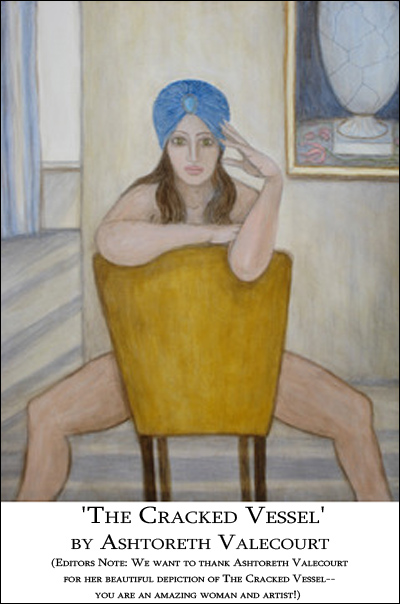
To demonstrate PTSD, I use the analogy of a cracked vessel. PTSD causes a fracture to the core concept of self which produces a crack in the soul. However, the soul, mind and body must continue to try to function as it did prior to the damage. The vase can be glued again to function, but push on the crack, and the vessel will break again.
PTSD is a mood disorder, specifically an anxiety disorder. The common symptoms of PTSD (whether in you or someone you care about who has been in a pathological relationship) includes:
• Intrusive thoughts about him/relationship/events of the relationship
• Nightmares
• Flashbacks or sensing effects reoccurring in the present moment
• Extreme reactions upon exposure to things that symbolize or resemble parts of the relationship
• Trying to avoid thinking about him or the relationship
• Trying to avoid situations that remind you of him or the relationship
• Blocked recall of all the events that occurred
• Decreased interest in daily activities
• Feeling numb, detached, unable to feel loving feelings
• Difficulty concentrating
• Hyper-vigilance (startle reflex)
• Hyper-arousal (feeling keyed up or too alert)
• Insomnia
• Anger/Irritability
Some of the biggest concerns for women are the symptoms associated with PTSD because it is interfering with the quality of their lives, their level of functioning, and often their ability to parent effectively. Many don't realize they have PTSD so they don't seek treatment. They just feel like 'they're going crazy' or 'I should be over it by now--why am I still having these experiences?' People are often relieved to find out a name and a reason for their experiences.
Unfortunately, others around them may also not realize what is wrong and may tell them to 'move on', 'get over it', 'just meet someone else', and yet months, and even years later, women can still be having PTSD symptoms. That's because PTSD does not just 'go away' without treatment. In fact, it worsens over time when neglected.
PTSD is considered a 'trauma disorder' because you have lived through an abnormal and traumatic life event. Trauma disorders require specific types of treatment in order to recover. Untreateded PTSD can lead to chronic anxiety and depression, substance abuse to help cope with the anxiety, other compulsive behaviors like eating, smoking, and sexual acting out, addiction to sleep aids, and chronic stress related medical conditions. It's not a disorder to be taken 'lightly.'
Those who have already been diagnosed with PTSD may not realize that PTSD is often a life-long condition. You won't always feel as anxiety-ridden as you do now, but depending on the severity of the PTSD, it can leave the vessel cracked. Future damage can cause the stress crack to re-fracture.
Survivors either highly identify with the analogy of the cracked vessel, or hate the analogy. Some have written me and said, "I don't like what you said about being a cracked vessel--anyone can change." I didn't create the symptoms and effects of PTSD. I have only learned to live with them....
People with PTSD need to live quiet, gentle lives. Their households, jobs, environments, and relationships need to reflect the tranquility that an overtaxed body needs. These are not people who need to have fast-paced, dramatic, traumatic and chaotic jobs, lifestyles or relationships. These are people whose bodies, minds, and spirits need to exist in a healing environment.
Subscribe to:
Posts (Atom)